
Naalyéhé Báhooghan – A home for goods
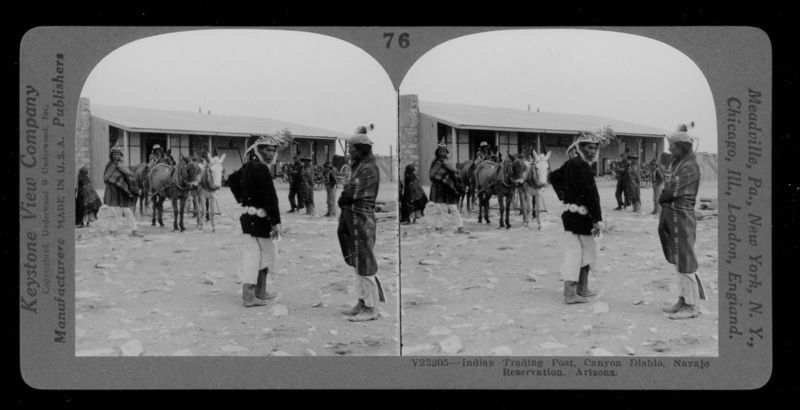
There is an estimation that 275 to 350 trading posts were doing business on the Navajo Nation from 1870 to about the late 1980’s. In 1868, the Navajos returned to their homelands from Bosque Redondo in Fort Sumner, New Mexico and many Anglo-Americans set up trading posts to sell goods and livestock. Early on, the Navajos traded wool and piñon nuts to barter for groceries, cloth, tools and livestock. After the Navajo resumed their cultural arts, traders begun accepting woven textiles, silver and turquoise jewelry, baskets, pottery and carvings in trade. Soon after, this “trade” resulted into the credit and pawn transactions.
The Two Grey Hills Trading Post located halfway between Shiprock, New Mexico and Gallup, New Mexico, by the base of the Chuska Mountains was established in 1897 and operating on an “by appointment only” status in 2020. Two Grey Hills tapestries are still known globally as being the finest examples of Navajo weaving. My father, Sam K. Teller, was a trader at the store for over 35 years. His broad wealth of experience and knowledge about weaving helped sustain and increase the fine reputation that regional weavers including members of our family gained. The rugs and tapestries from Two Grey Hills became highly collectible and treasured. Our father worked with 2 different leasers of the post, Willard Leighton and Derald Stock, from 1945 to 1980. He became an integral member of the Toadlena, Two Grey Hills and Newcomb, NM communities. My father wasn’t just a store clerk, he became a peace mediator and a letter writer. He interpreted letters, delivered urgent phone messages, drove expectant parents or those ailing to the hospital, interpreted medical conditions, mediated legal situations, drove to drop off or pick up military residents, coordinated food drives for funerals and other occasions, and bought and sold Navajo weavings. In essence, most Trading Posts were cultural gatherings. In our grandparents’ day, they would travel to the Post for several days, camping and socializing before goods were traded.
After the “trade” went heavily into the credit and pawn transaction, the Federal Trade Commission held hearings about the “perceived cultural misunderstandings” by the Anglo traders and the Navajos claim of high interest rates, as much as 400% tacked onto their credit per month and misleading rules on pawn transactions resulting in losing their pawned items. New regulations were set in 1973 and this led to most trading posts closing and losing their business. Today, few are operating as quick stops, and even fewer are still quality places to buy Navajo textiles.
Lynda Teller Pete
June 2020